How Information Architecture Drives Modern Domain Authority
Strategies for professional growth through structured material organization
The criteria for domain authority have actually gone through a substantial shift as of 2026. Online search engine algorithms no longer focus on easy backlink counts as the primary indicator of trust. Instead, they concentrate on topical depth and how clearly a website arranges its details. This modification has actually resulted in the increase of content clusters as a requirement for constructing online presence. For any service in the local market, comprehending how to group associated subjects is now more crucial than just producing high volumes of scattered articles.
A structured approach includes developing a central page that covers a broad subject and then linking it to a number of more specific sub-topic pages. This approach tells online search engine that the site has a high level of knowledge in a specific discipline. In 2026, bots are far better at recognizing the relationship between various pages. When a website links associated concepts together realistically, it helps these bots map out the website's proficiency, which increases the likelihood of ranking for high-competition terms.
Domain authority in this environment is less about a single rating and more about just how much a website dominates a particular niche. For circumstances, a site focused on industry-specific solutions will find more success by creating twenty interconnected pages about one specific service than by writing fifty unrelated posts about basic business trends. The focus is on quality and connection rather than raw quantity.
Improving user retention with specialized information centers
User behavior stays a top-tier ranking element. When visitors find an efficient collection of information, they tend to stay longer and communicate with more pages. This increased dwell time signals to online search engine that the content is valuable. In the present 2026 search environment, these signals are directly connected to how authority is dispersed across a domain. By utilizing a main details center, a site can guide a user from a general concern to a particular response without forcing them to search the site by hand.
This navigation style lowers friction. When a visitor shows up from an online search engine, they must immediately see links to associated subjects that expand on the initial inquiry. For companies in the surrounding region, this indicates developing content that expects the next concern a consumer might have. If a user reads about the basics of a service, the next sensible action needs to be a link to an in-depth guide or a case study located within the very same cluster.
The worth discovered in Asia Virtual Solutions Solutions typically leads to greater conversion rates due to the fact that it constructs a sense of trust with the reader. When a business provides deep, arranged answers for totally free, they establish themselves as a specialist before the customer even speaks to an agent. This know-how is what search engines are attempting to measure when they appoint authority scores.
Internal link circulation in the local area digital methods
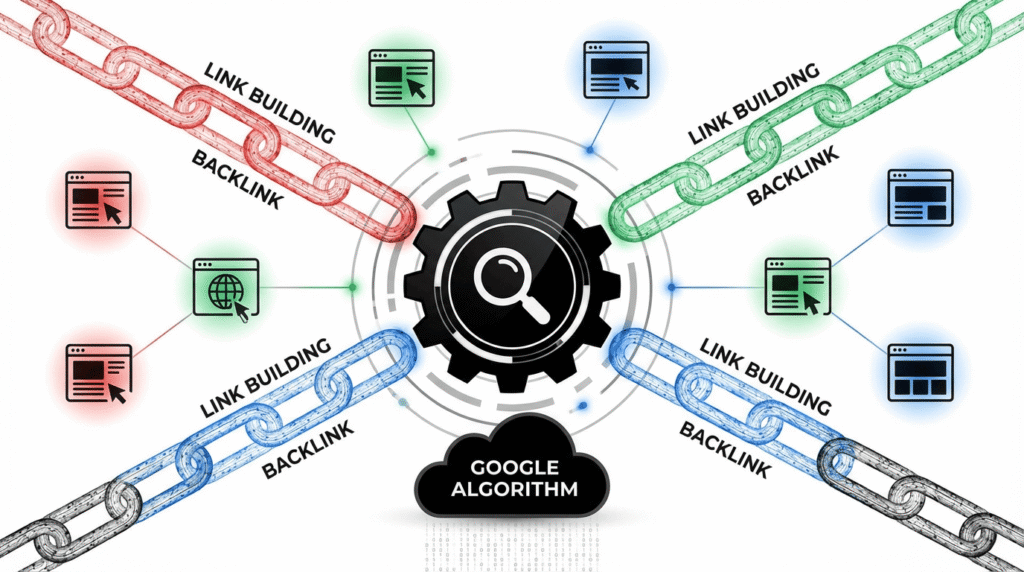
Internal links are the pipelines through which authority streams. Without a sensible structure, some pages might end up being "orphaned," implying they have no links pointing to them. These pages are invisible to browse engines and do not add to the overall strength of the domain. In 2026, the most efficient websites utilize a "silo" technique where internal links stay mainly within their own topic cluster. This prevents the dilution of topical authority and makes sure that the most crucial pages get the most internal link equity.
Strong internal linking also helps with the indexing of brand-new content. When a brand-new page is added to an existing cluster, the search engine discovers it quicker because it is currently crawling the high-authority pillar page. This is specifically useful for companies in the region that need to react quickly to market changes or new regulations. By positioning new details within a tested structure, the site ensures that the new material inherits a few of the established authority of the older pages.
The function of AI and semantic search in 2026
Search engines in 2026 are heavily affected by generative AI and semantic understanding. They no longer try to find precise keyword matches but instead try to comprehend the intent behind a search. This means that content clusters should be written to address particular intents rather than simply include specific words. Organizing content around "search intent" involves categorizing pages by whether the user wishes to find out, buy, or discover a particular area.
A cluster focused on professional assistance might have one page for individuals researching costs, another for individuals looking for regional service providers in the local market, and another for people trying to resolve an issue themselves. By covering all these various intents within a single cluster, the domain proves to the search engine that it is the most thorough source for that subject. This thoroughness is a crucial component of what is now thought about domain authority.
The prevalent adoption of Asia Virtual Solutions Web 2.0 Link Specialists shows that businesses are moving far from conventional SEO techniques in favor of more advanced info architecture. It is no longer sufficient to have a blog site. A website must work as a library of interconnected understanding where every page serves a specific purpose in supporting the central style. This prevents "keyword cannibalization," which takes place when multiple pages on a website contend for the exact same search term, successfully harming the rankings of all of them.
Technical health and website speed in the area
While material company is a priority, the technical foundation of the website can not be disregarded. In 2026, the speed at which these material clusters load is a major consider how authority is perceived. If a site is slow, users will leave before they can check out the cluster, which ruins the dwell time metrics pointed out earlier. Ensuring that the website is enhanced for mobile devices is likewise a requirement, as the bulk of searches now occur on phones and wearable tech.
Handling the "crawl budget plan" is another technical necessity. Online search engine only invest a certain amount of time on each site. If the website has countless low-grade pages, the bot may never reach the high-quality content clusters. Cleaning up old, irrelevant content and concentrating on the strongest clusters assists make sure that the search engine focuses its attention where it matters most. This technical maintenance is a routine part of keeping a domain's authority high gradually.
Examining the efficiency of content clusters
Measuring the success of these structures requires taking a look at more than just traffic. Analysts in 2026 take a look at "subject share," which determines how much of a particular search topic a website controls. If a site ranks for 80% of the keywords related to a specific industry segment, its authority because niche is thought about very high, even if its overall site traffic is lower than a bigger, more general competitor.
Tracking how users move through a cluster is also telling. If visitors are clicking from the pillar page to multiple sub-pages, the cluster is doing its job. If they are leaving after just one page, the internal links or the content itself might require to be changed. Businesses in the local market need to routinely investigate these paths to guarantee they are offering the most direct path to the information the user wants. With time, this data-driven method leads to a more authoritative and beneficial site that stands out in an increasingly crowded digital space.
Maintaining authority is a continuous process of improvement. As brand-new info appears in 2026, old pages within a cluster need to be upgraded to show the most existing data. This informs online search engine that the site is not only a specialist on the topic however likewise a present and reliable source. Consistent updates to an efficient structure are the most efficient way to make sure that a domain remains at the top of search results page for several years to come.